
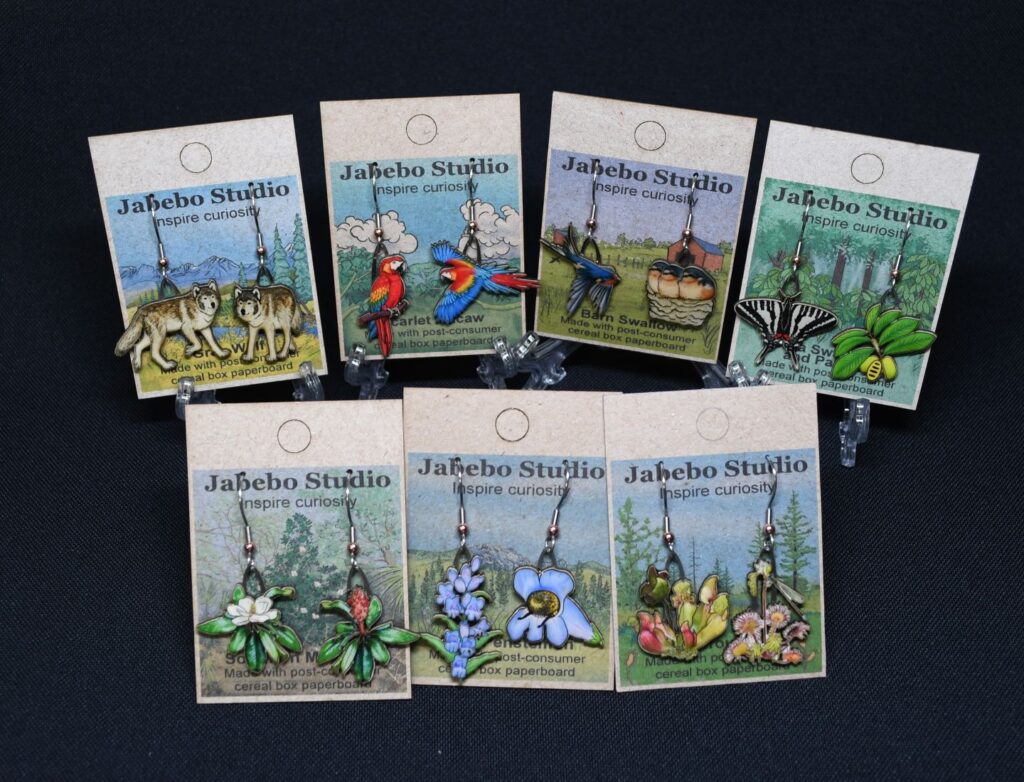
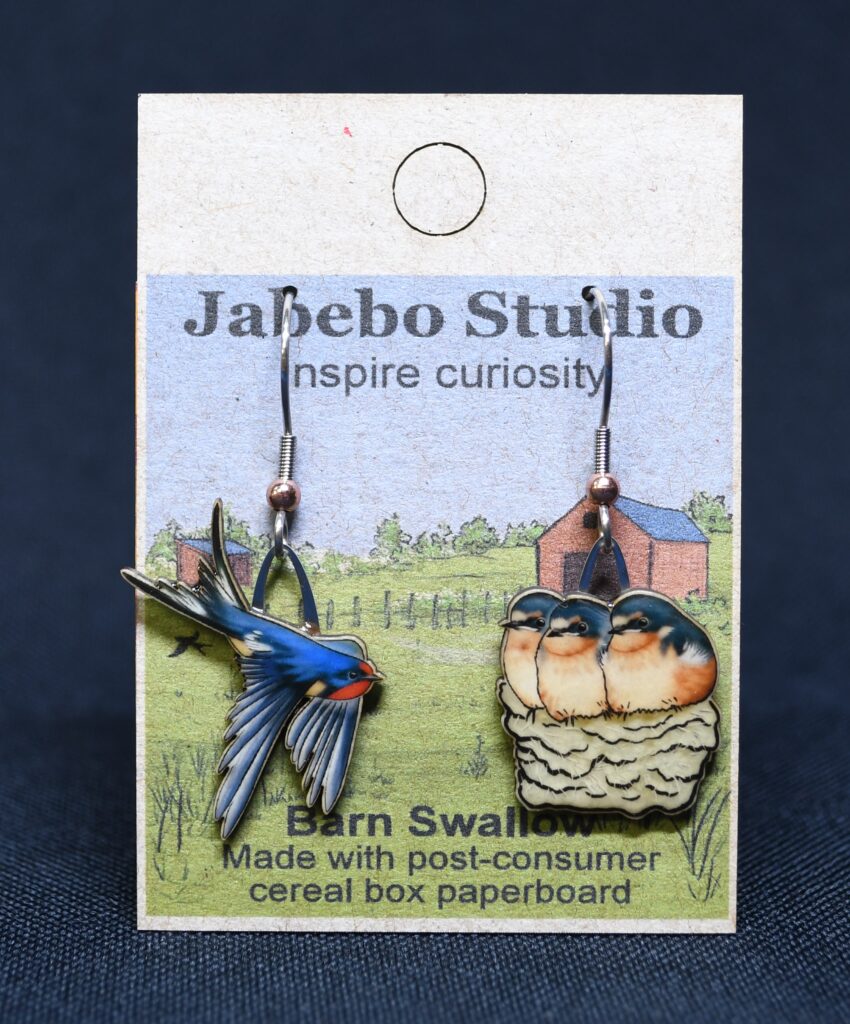
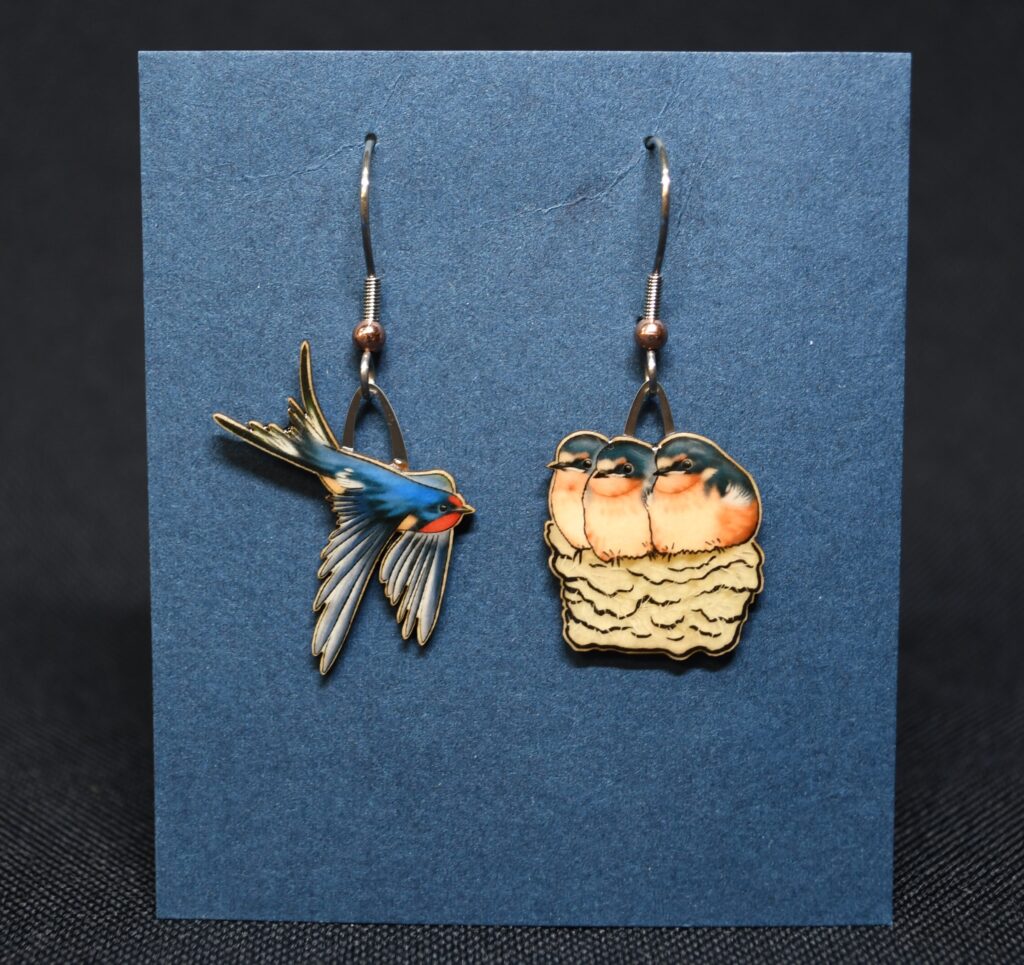
You might need to build something bigger than a typical bird box to house a barn swallow family. They like to build nests in large wooden structures such as barns and sheds. In nature, they use a cave or a space sheltered in a crevice overhang. Their nests, which look like a cup made of mud, are often built against a wall with a bit of ledge for support. Adult barn swallows’ deeply forked tail is an aid to their superior agility, allowing them to catch insects in flight easily.
Illustrated by Kevin
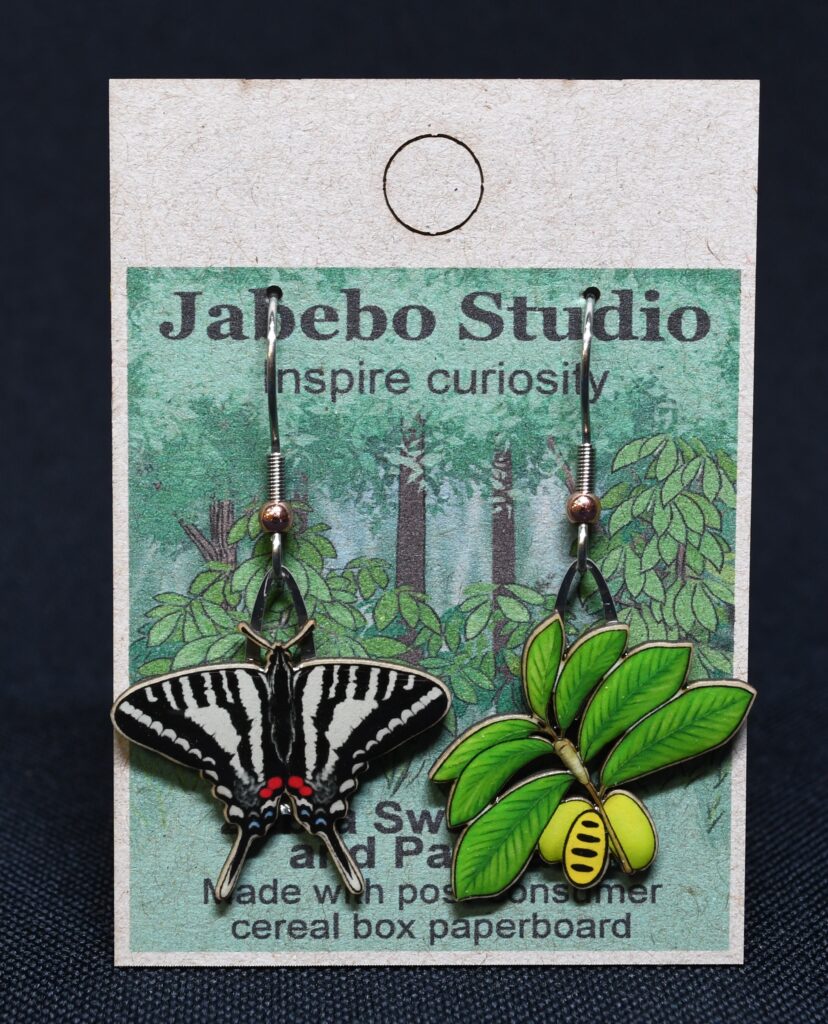
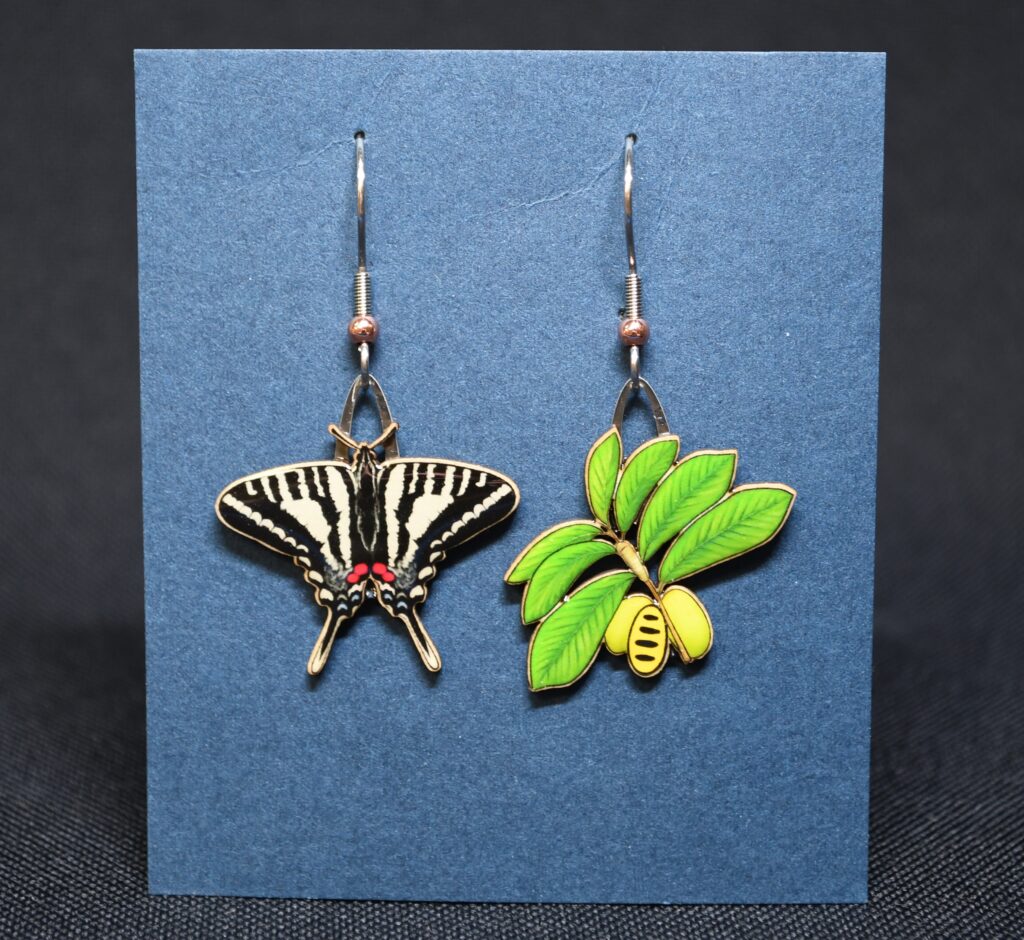
Pawpaws are a very interesting plant producing a unique and underrated fruit and we tried as hard as we could to put the whole story into a set of earrings. Our design features a zebra swallowtail butterfly which lays its eggs on the leaves and is totally dependent on them for food. If you have not heard the buzz about pawpaw fruit, then travel to a pawpaw festival which are becoming increasingly popular at summer’s end when the fruit ripens. I
llustrated by Kevin
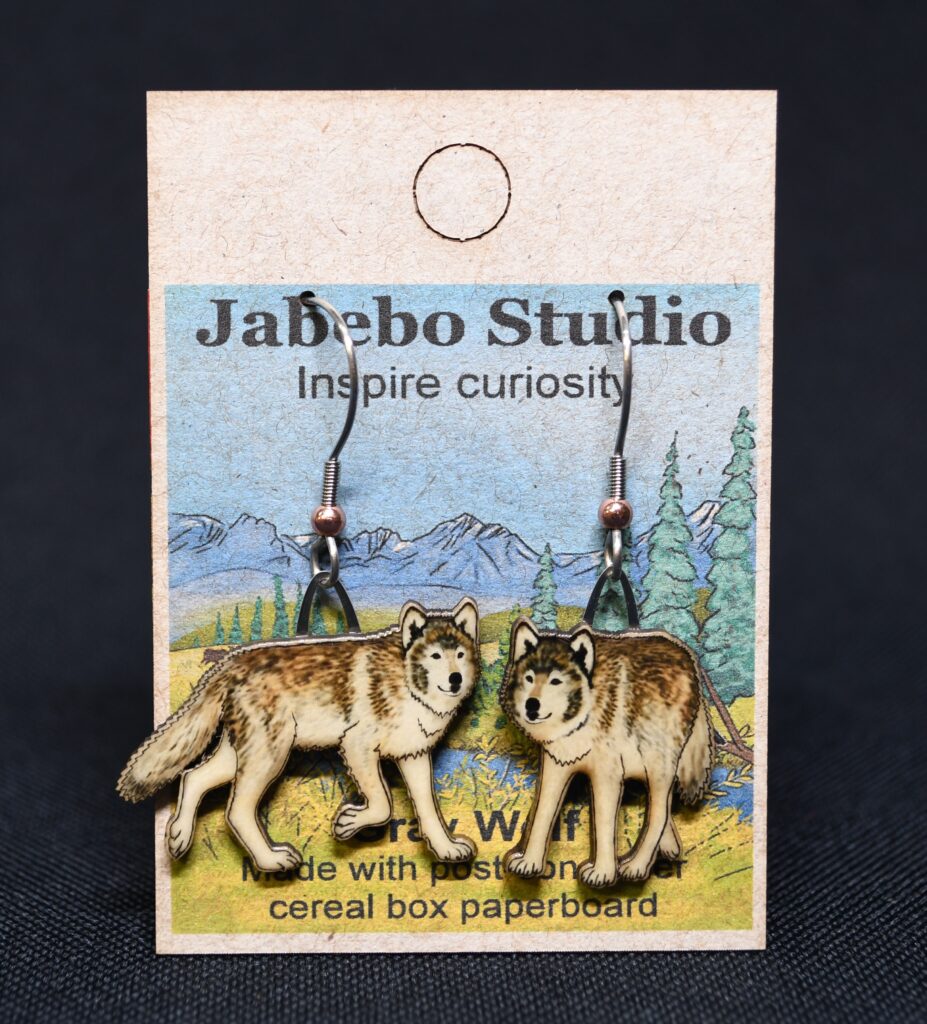
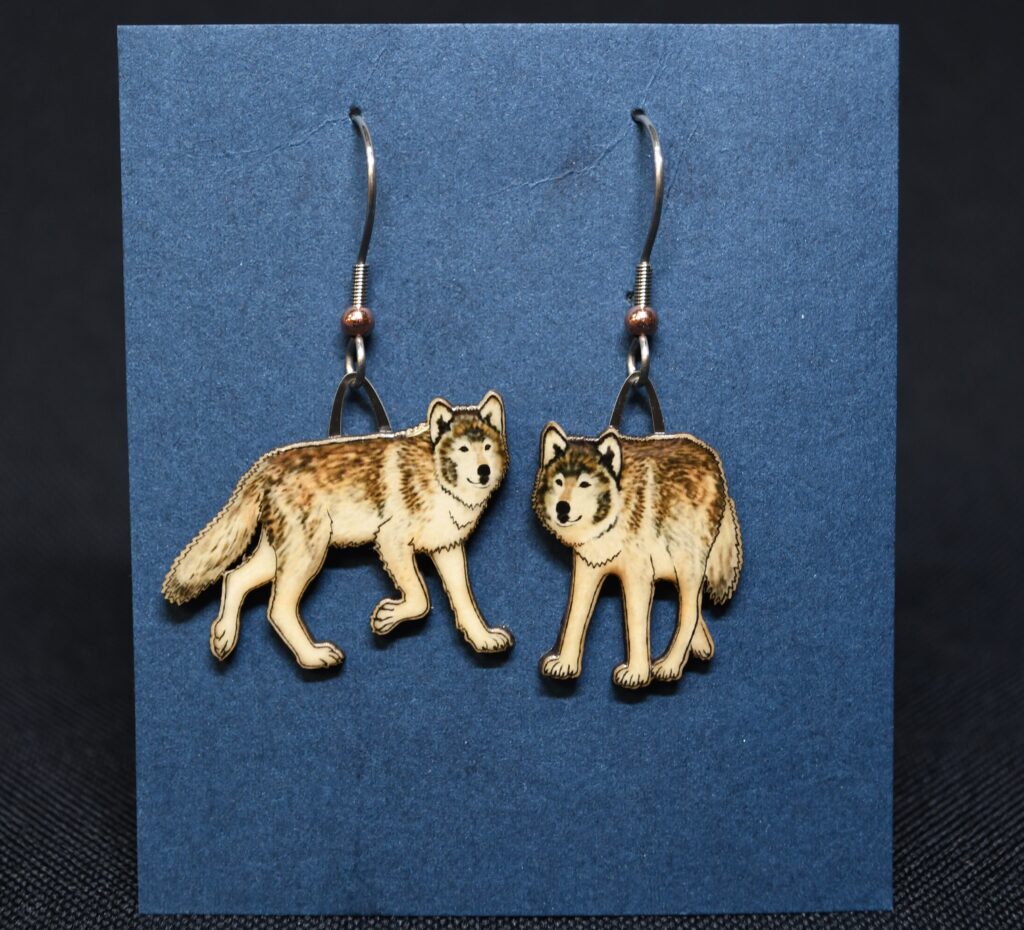
We used Yellowstone National Park as an inspiration for this redesign of our 505 catalog number. Their reintroduction has become a showcase of how the presence of wolves has a dramatically positive effect on habitat.
Illustrated by Kevin
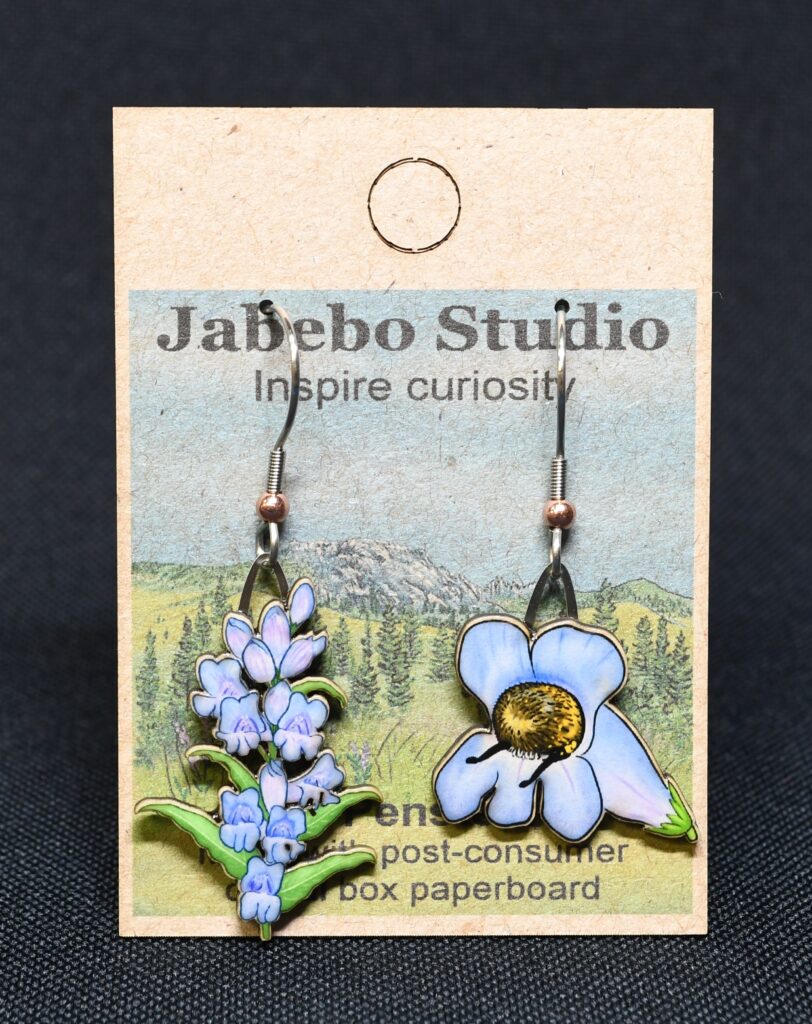
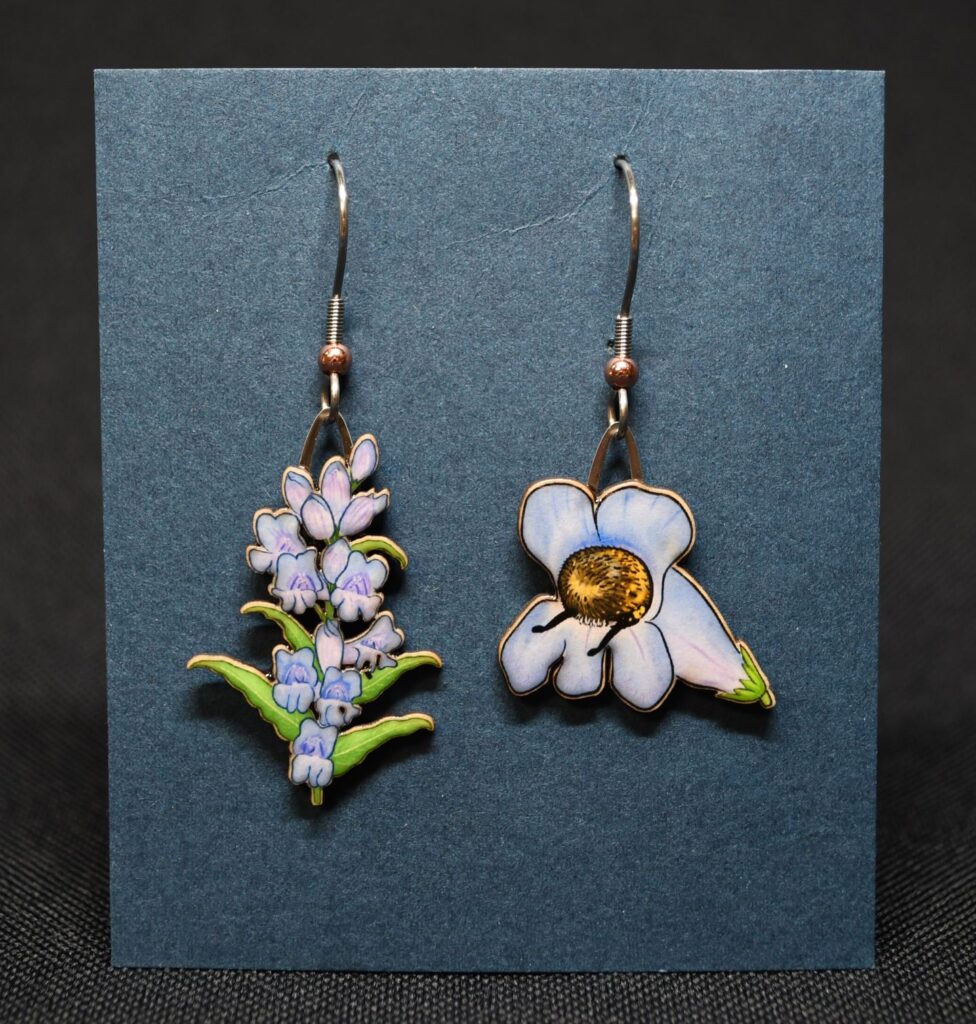
A number of species in this group of wildflowers, also known as Beardtongues, are known for their white, blue, and purple flowers that are attractive to bees. They are an important species component of prairies and open habitat. The flower petals are fused together forming a tube for the bee to crawl into. From the perspective of a bee watcher the joy is watching the busy insects pause as they disappear into the flower until only their butt shows.
Illustrated by Kevin
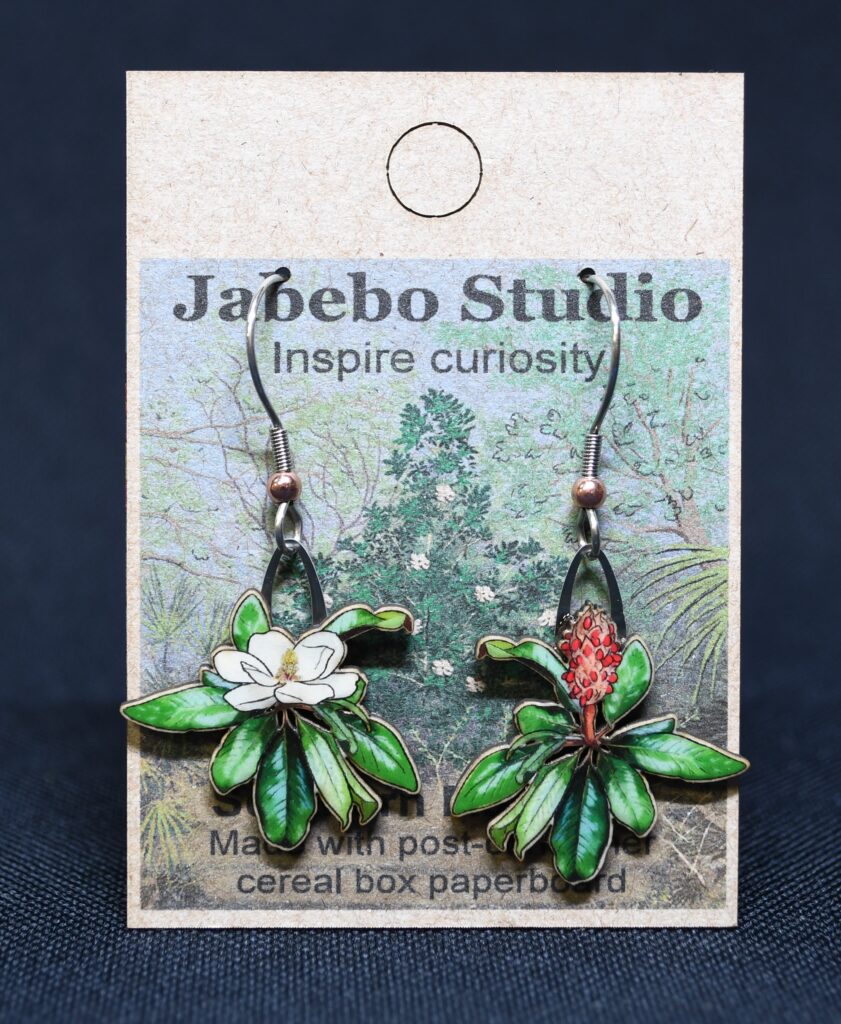
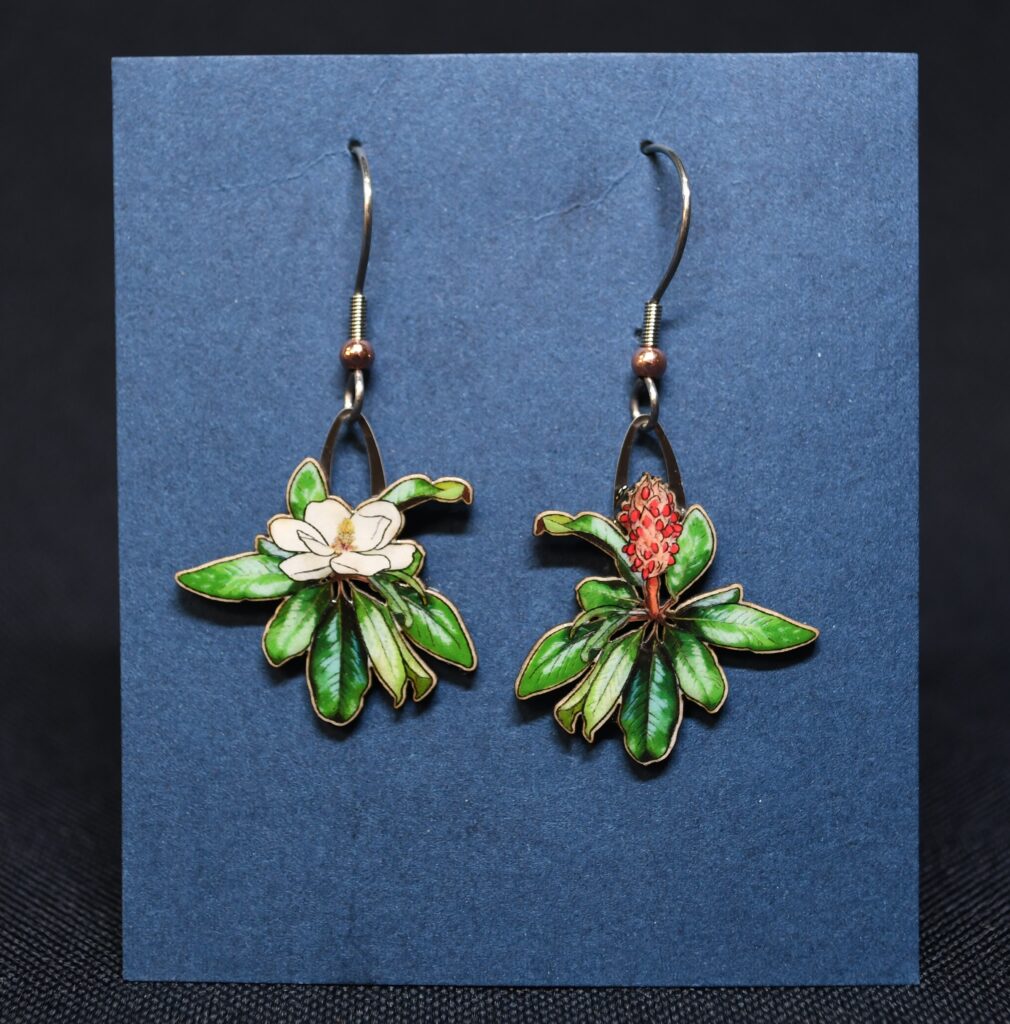
The native range of this famous magnolia maps across the Deep South, although they do grow as far north as Pennsylvania, and there is even one here on Bishop Street. They are well known for large white fragrant flowers that attract beetles for pollination. Their uniquely large, durable leaves allow them to thrive as an understory tree, growing in the shade of a mature forest. Eventually, the tree becomes part of the canopy itself.
Illustrated by Nora Steel
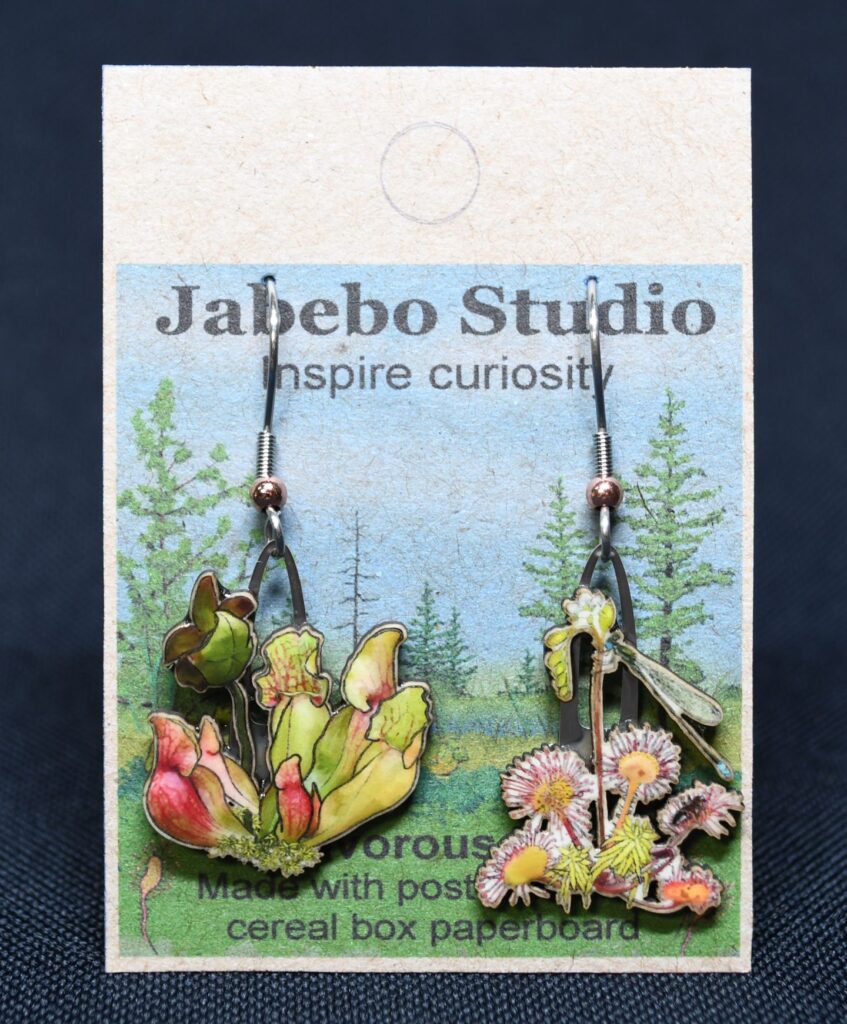
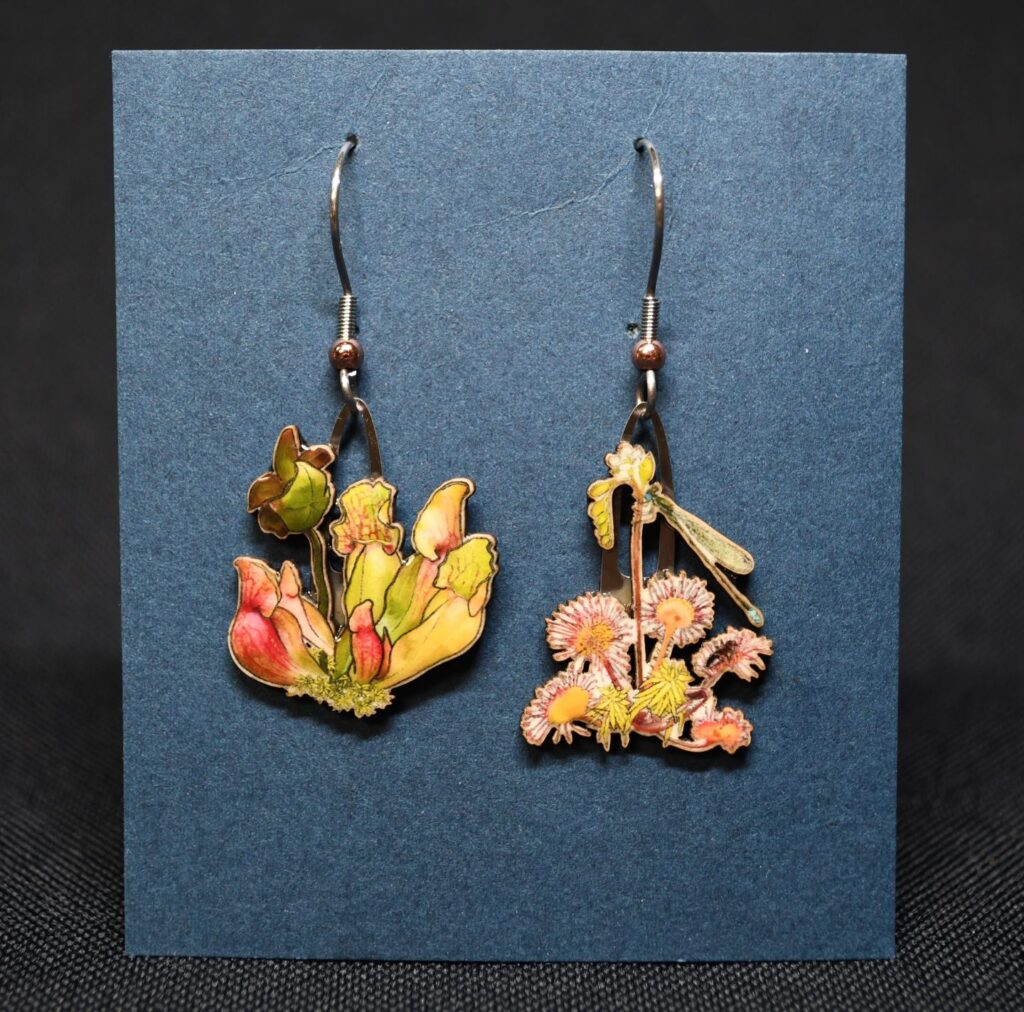
These native plants can be found in rare types of habitats, usually with wet acidic soils that make it difficult for plants to obtain nutrients. There are many different species of carnivorous plant, each with its own interesting method of capturing insects. Nora Steele illustrated this pair featuring purple pitcher plants and a sundew with its sticky pads. A sprite damselfly has landed on the tiny sundew.
Illustrated by Nora Steel
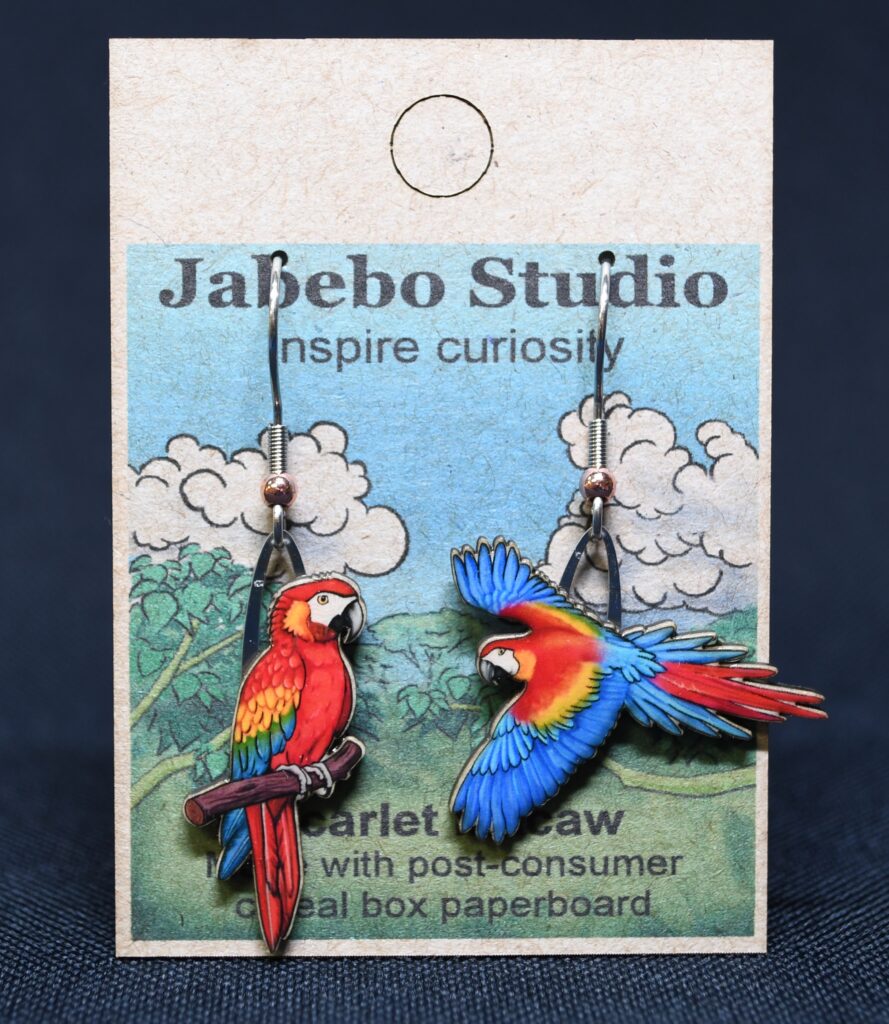
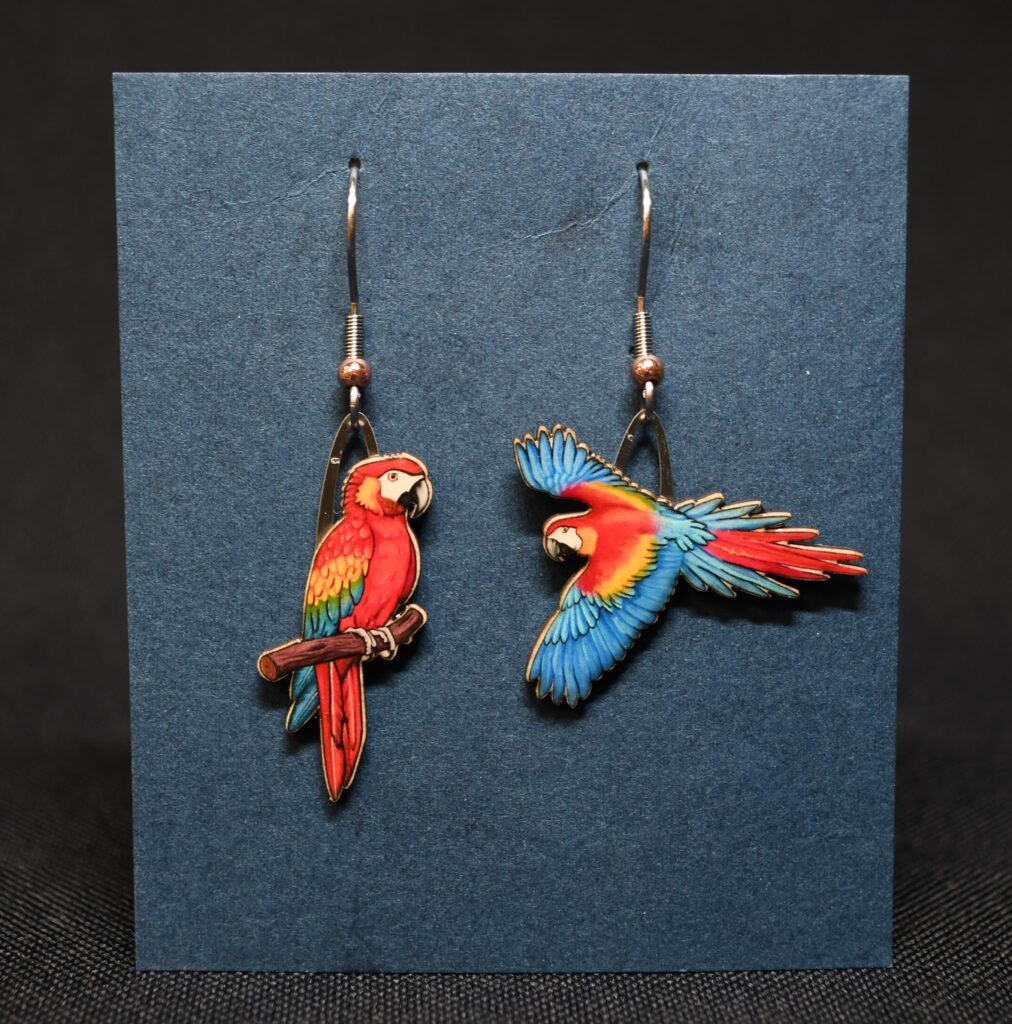
This bright red parrot is the most abundant macaw species in rainforest of Mexico and Central America. Historically, their valuable feathers were used in trading, and they have been found in archeological sites hundreds of miles north of their natural habitat. Most of us have met a living specimen at the zoo or as someone’s pet. Our staff artist Aline borrowed the Blue and Gold Macaw design (created by Kelly Kling) to create a new Scarlet Macaw design.