

Using their colorful petals and sweet fragrance, flowers lure bees in with the promise of a tasty nectar treat. In exchange, bees dust them with pollen collected from other flowers they’ve fed from. This trade gives the flower what it needs to reproduce by growing seeds and fruit.
Also available with two matching daisies, no bee (455Z).


Also known as the Coneflower, Echinacea is related to sunflowers. It is a common wildflower in central and eastern North America. The plant is renowned for its medicinal properties and is touted as a cure for many ailments.
Also available with two matching flowers, no butterfly (456Z).


In temperate climates deciduous trees drop their leaves before the onset of winter. A plant’s ability to recover valuable nutrients from the leaves before letting go causes the cascade of changing colors that is characteristic of the Fall season.


The tri-foil leaves of the trillium are actually bracts, leaf-like structures associated with flowers. Although green and photosynthesizing, bracts are not technically leaves. Thus, a trillium plant could be seen as one large flower.


Found everywhere in the United States except Alaska and Hawaii. It is most common in the eastern and midwestern states.

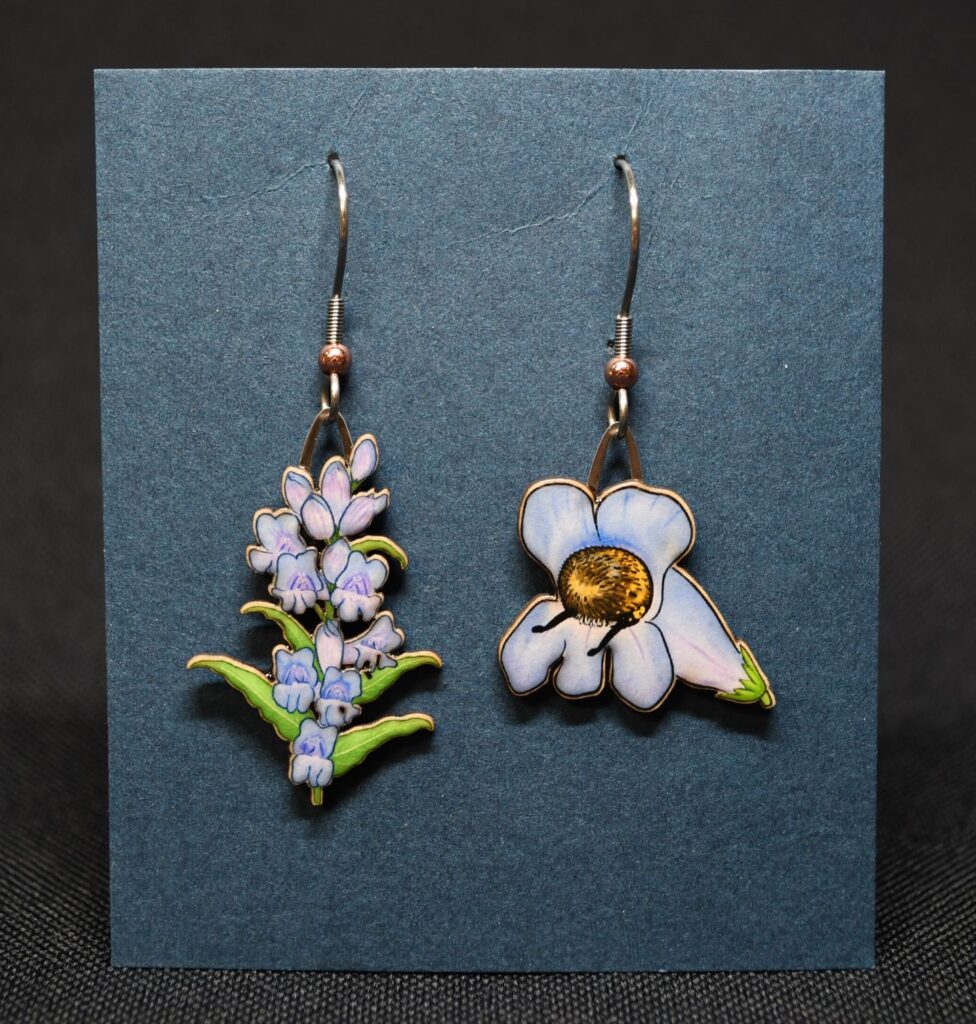
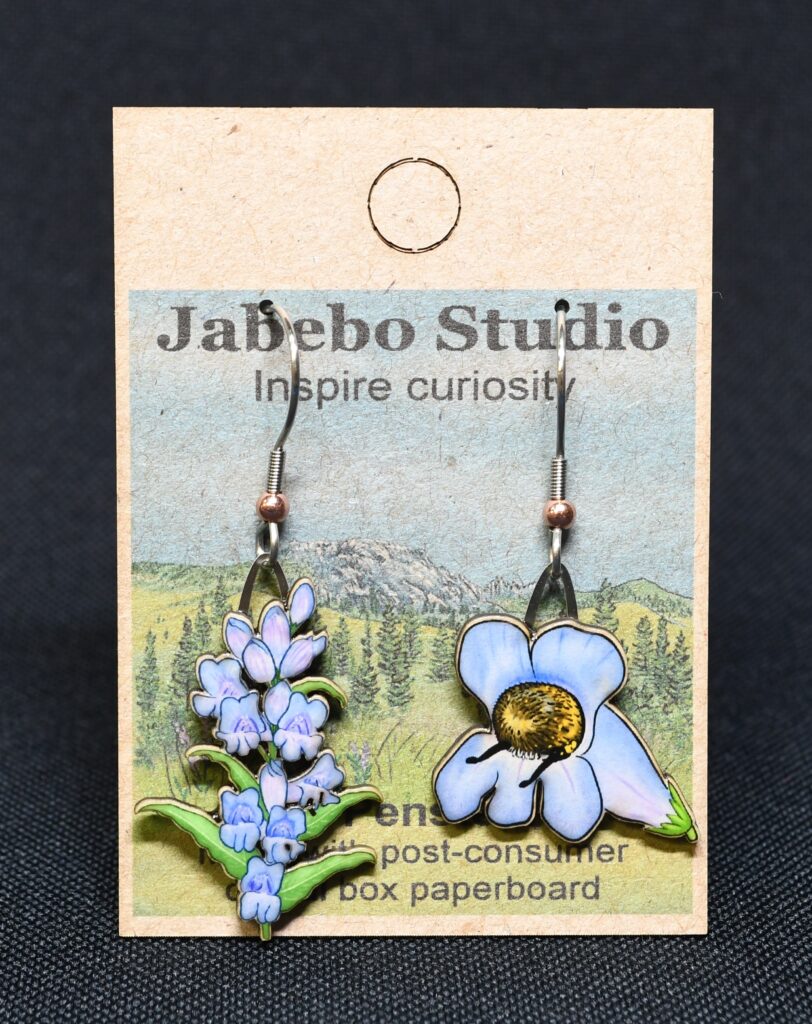
A number of species in this group of wildflowers, also known as Beardtongues, are known for their white, blue, and purple flowers that are attractive to bees. They are an important species component of prairies and open habitat. The flower petals are fused together forming a tube for the bee to crawl into. From the perspective of a bee watcher the joy is watching the busy insects pause as they disappear into the flower until only their butt shows.
Illustrated by Kevin

Found in southwestern United States and is collectively the state flower of Texas.

Originating in Europe, the pervasive dandelion is now found around the world. Though considered a pest by many landscapers, it serves as an essential source of nectar for pollinators. They are also a nutritional food for humans.


This flower is native to North America but is grown throughout the world! With a variety of colors, sizes, and economic uses, they yield cheer, dyes, bird seed, cooking oil, and more. These amazing flowers track the sun when they are young and face east when mature.
Designed by guest artist June Ramsay.

The first orchid to be added to our collection, but not the last. The spooky Ghost Orchid lives in the cypress swamps of southern Florida. As an epiphyte, it grows in trees, but-unlike most plants- it has no leaves. The roots, which grow and hold on to the bark of a living tree, are also photosynthetic. Because of their often inaccessible habitate, these orchids are nearly impossible to spot. But, enthusiasts may go to see their blooms at the Corkscrew Swamp Sanctuary in June and July.


This is a flamboyant spring orchid can be seen in northeastern forests. This designcreated by Nora Steele features an ephemeral bouquet that has spring form the ground. And in the closeup of a flower on the opposite side features a bumblebee, the necessary pollinator, emerging from the flower.


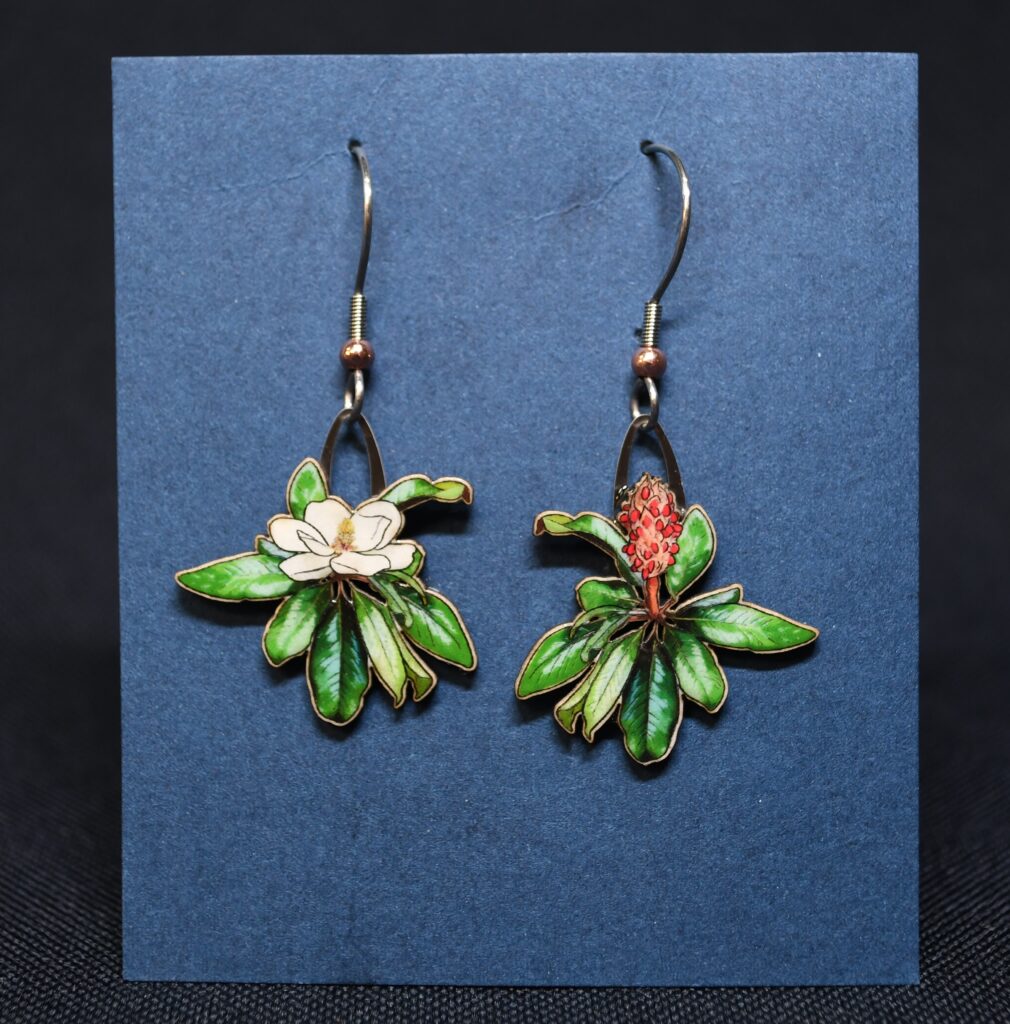
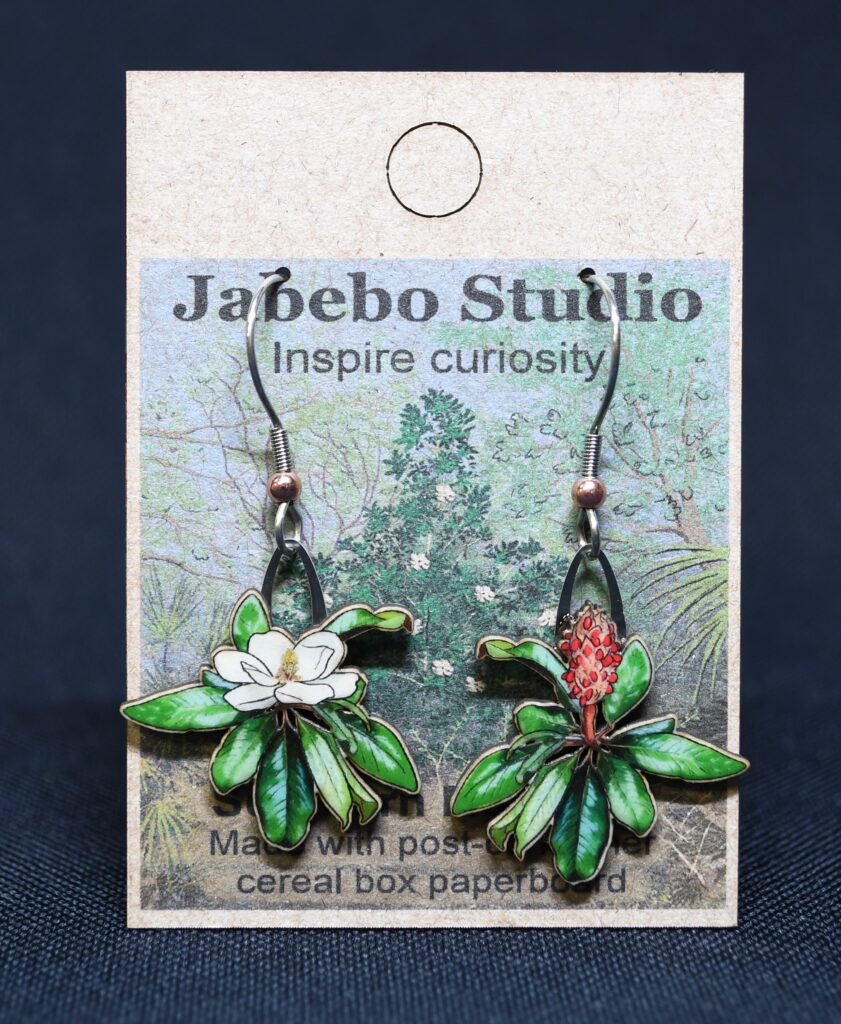
The native range of this famous magnolia maps across the Deep South, although they do grow as far north as Pennsylvania, and there is even one here on Bishop Street. They are well known for large white fragrant flowers that attract beetles for pollination. Their uniquely large, durable leaves allow them to thrive as an understory tree, growing in the shade of a mature forest. Eventually, the tree becomes part of the canopy itself.
Illustrated by Nora Steel

This bright, showy wildflower can be found in western landscapes. It gets its red color from “bracts” or leaves modified to look like flowers. The actual flowers are less conspicuous but the brilliant red bracts lure in some very specialized pollinators-hummingbirds.


Endemic to the Sonoran Desert this large, iconic cactus can be found in southern Arizona and northwestern Mexico. Their large nocturnal flowers are pollinated by bats who visit when the flowers are in full bloom at night.


This is a common type of cactus associated with desserts but actually can be found growing wild in the east as well. They can survive in sandy soils where most other plants do not grow very well because water drains away quickly.

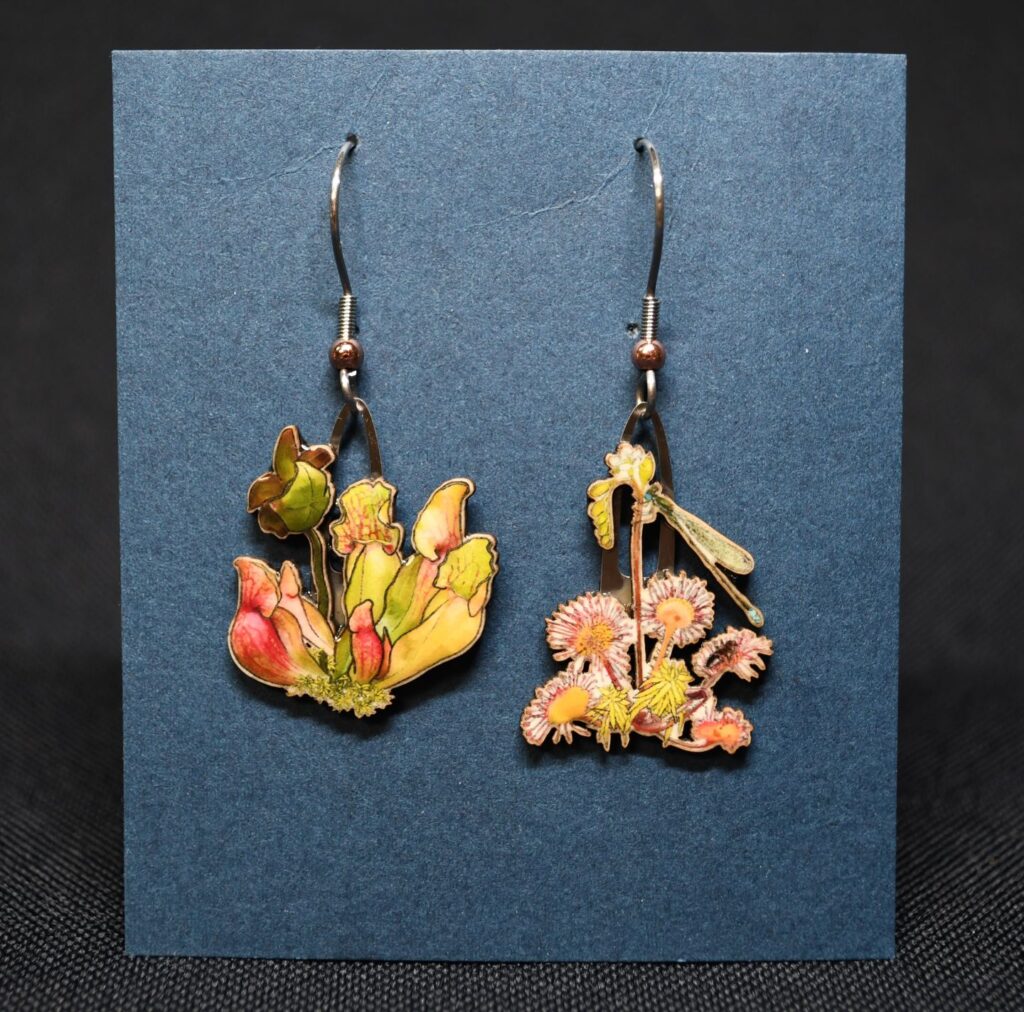
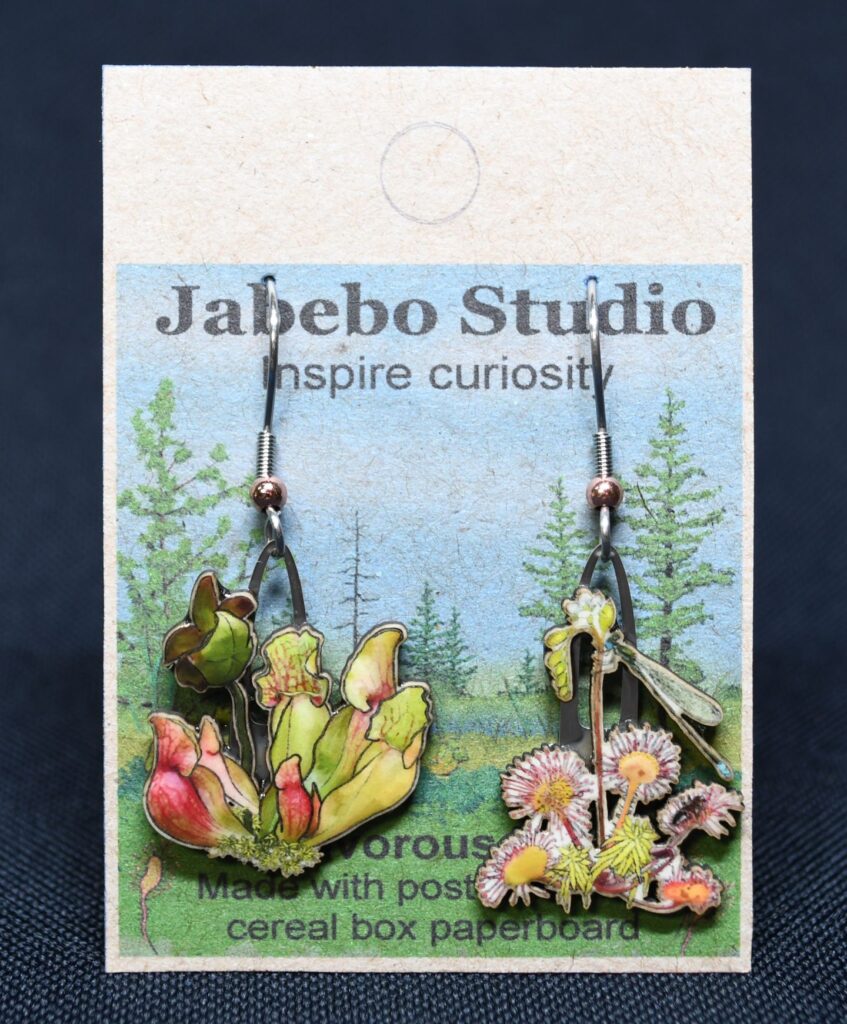
These native plants can be found in rare types of habitats, usually with wet acidic soils that make it difficult for plants to obtain nutrients. There are many different species of carnivorous plant, each with its own interesting method of capturing insects. Nora Steele illustrated this pair featuring purple pitcher plants and a sundew with its sticky pads. A sprite damselfly has landed on the tiny sundew.
Illustrated by Nora Steele

As they feed on dead wood and plant material, important nutrients are returned to the soil. Depending on the species, the fruiting bodies on sporophytes can appear as typical mushrooms on dead wood or on the ground, popping up where the mycelium is feeding on buried wood and organic material.


You can be certain that many of the mushrooms piping up around you are mycorrhizal, meaning they have an important symbiotic relationship with plants. Helping trees grow is as important as breaking down dead material.
